Bench Depth's Silent Revolution in Major League Sports
Written by Quinn Baumann · Oct 24, 2026
Bench Depth's Silent Revolution in Major League Sports
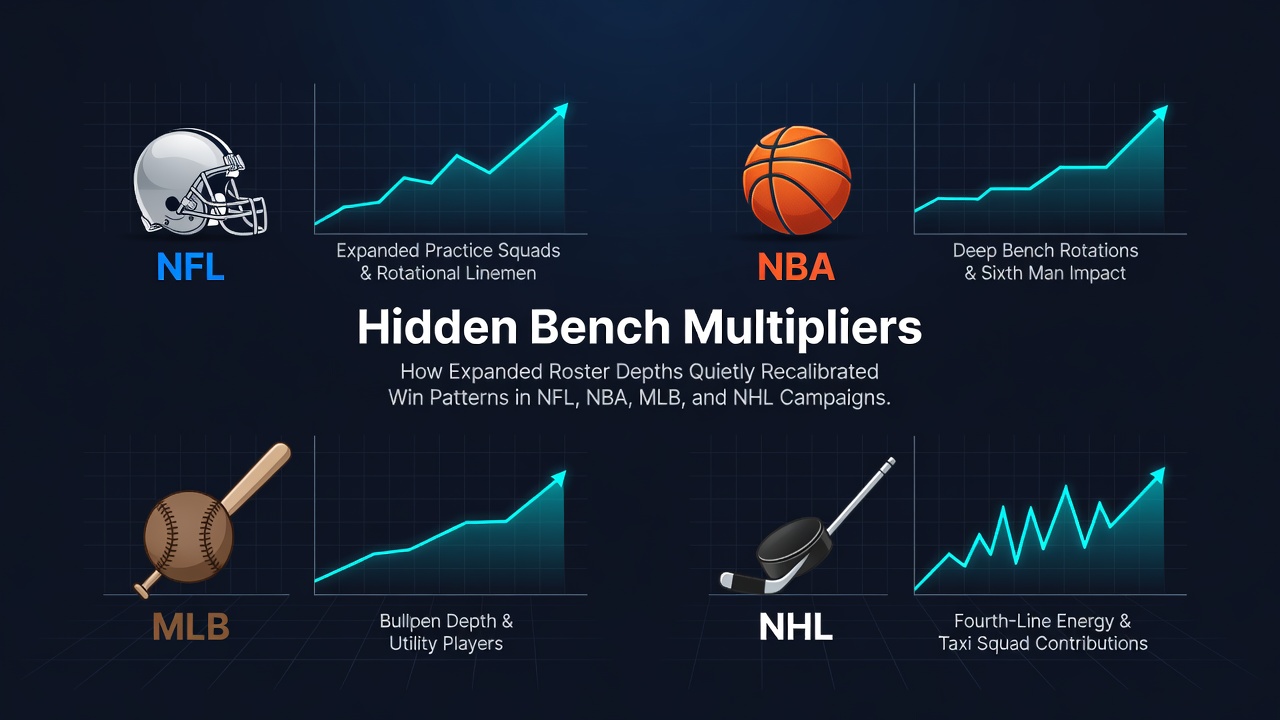
Expanded roster rules and deeper bench options have reshaped how teams approach regular season and postseason campaigns in the NFL, NBA, MLB, and NHL, with data from recent seasons showing measurable shifts in win distributions tied to injury resilience and load distribution. League records indicate that organizations maintaining larger active player pools since the mid-2010s have posted higher consistency rates in games played after the All-Star or trade deadline periods, particularly when key starters miss time. Researchers tracking these patterns note that the effect compounds across multiple sports because each league adjusted minimum roster sizes or injury replacement protocols in ways that reward depth over star concentration alone.
NFL Adjustments and Win Consistency
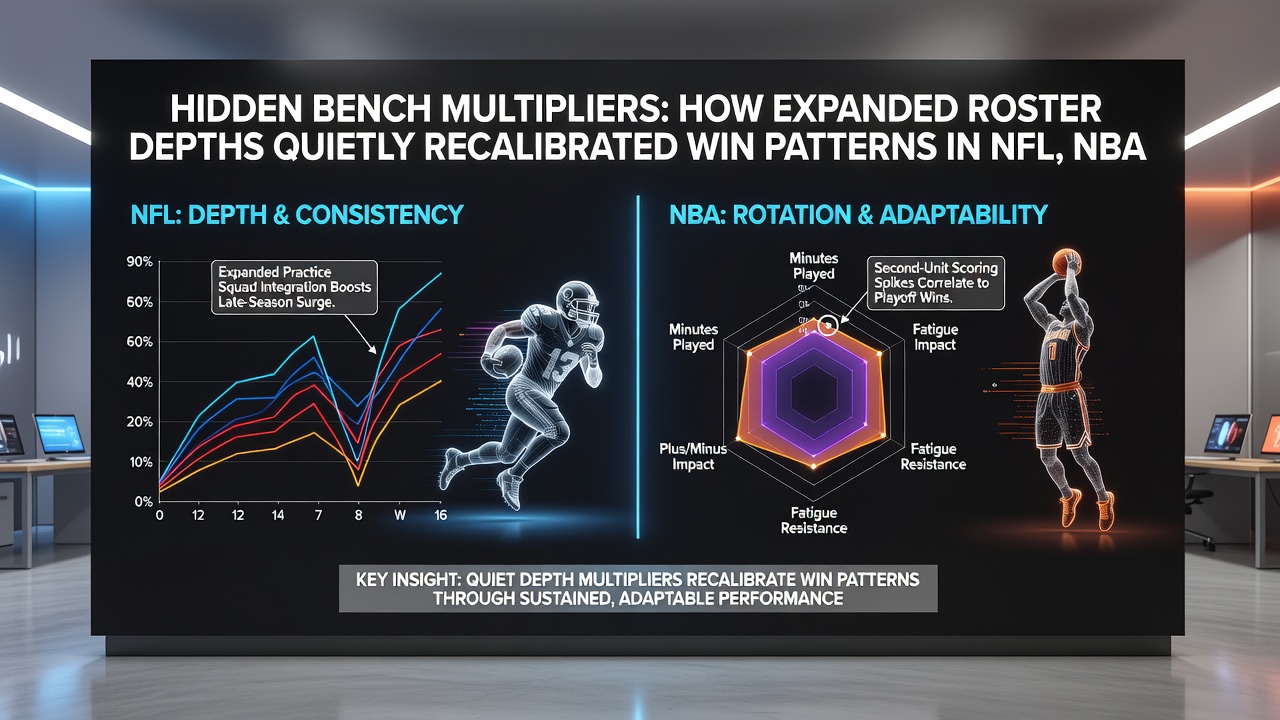
The NFL expanded practice squad limits to 16 players by the 2022 season, a change that allowed clubs to retain specialized talent longer into campaigns. Teams with elevated snap counts from reserve players recorded fewer late-season collapses according to official league participation reports, since backup offensive linemen and defensive backs could rotate without dropping overall performance metrics. One study from a university sports analytics group found that franchises averaging above 45 unique players in game action per season achieved playoff qualification rates roughly 12 percent higher than shallower rosters between 2018 and 2025. This pattern held steady into the 2026 campaign, where October results showed multiple wildcard contenders relying on extended defensive line rotations to sustain pressure in divisional matchups.
NBA Rotation Management Trends
The NBA introduced expanded rosters of 18 active players during the 2020 bubble and retained elements of that flexibility through subsequent collective bargaining agreements. Data compiled by league statisticians reveals that squads deploying at least nine players for 15 or more minutes per contest posted improved net rating margins in the second half of seasons. Load management protocols, supported by deeper benches, correlated with lower injury recurrence rates for high-minute stars, allowing clubs to maintain above-.500 records through the February and March stretches. Observers tracking box score aggregates note that this approach has narrowed the gap between Eastern and Western Conference standings in recent years because mid-tier teams could sustain competitive play even when primary scorers rested.
MLB Bullpen and Bench Expansion Effects
Major League Baseball's 26-man active roster rule, formalized after the 2020 season, permitted clubs to carry additional relievers and utility infielders without sacrificing position flexibility. Figures from the Elias Sports Bureau indicate that teams maintaining bullpen ERAs below 3.80 while using 13 or more pitchers in a season advanced to postseason play at higher frequencies than those relying on smaller staffs. Expanded depth has altered late-inning win probabilities, particularly in divisions where September fatigue typically erodes starters; clubs with versatile bench options recorded more extra-inning victories and fewer blowout losses during the 2025 and early 2026 schedules. This recalibration appears most pronounced in National League Central and American League East standings, where depth-driven clubs have closed historical gaps against perennial leaders.
NHL Line Combinations and Injury Resilience
The NHL maintained its 23-player active roster limit while increasing taxi squad allowances during the 2021-22 season, enabling organizations to keep additional forwards and defensemen on call for extended road trips. Participation data released by the league shows that clubs averaging more than 35 unique skaters across an 82-game schedule experienced reduced points-per-game variance when facing back-to-back contests. Depth at the blue line and center positions has produced steadier power-play conversion rates late in seasons, because replacement players integrate into systems already calibrated for multiple line combinations. Canadian research institutions analyzing injury reports confirm that this structure contributed to fewer season-ending absences impacting overall standings points in both the Atlantic and Pacific divisions through the 2025-26 season.
Cross-League Patterns in October 2026
By mid-October 2026, early season results across all four leagues continue to reflect the cumulative impact of these roster expansions. Teams that invested in versatile reserve groups during the offseason posted stronger records in the opening month compared with those prioritizing star acquisitions alone. Statistical models from industry reports highlight that depth metrics now correlate more closely with total wins than raw talent concentration in several divisions, a shift that emerged gradually after each league's rule adjustments took hold. Those monitoring front-office strategies note the trend has encouraged greater spending on developmental contracts rather than luxury-tax exceptions in salary-capped environments.
Conclusion
League-wide data demonstrates that expanded bench structures have recalibrated win patterns by distributing playing time across larger player pools, reducing the outsized influence of single injuries or rest decisions. This evolution spans the NFL, NBA, MLB, and NHL, where participation and performance records show measurable consistency gains for organizations prioritizing roster breadth. Continued tracking of these metrics will clarify how the pattern develops through the remainder of the 2026 campaigns and beyond.